Expressvpn Glossary
Static data

What is static data?
Static data is data that remains unchanged after it is created or collected. It serves as a fixed reference point and is not expected to be modified during normal use. Examples include product descriptions, company addresses, and mathematical constants.
It’s best understood in contrast with dynamic data, which updates over time, either manually or automatically. A train route map is static; the live arrival times at a station are dynamic.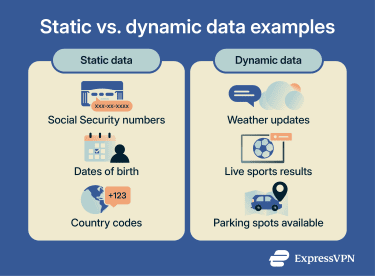
See also: Data integrity, data validation, data dictionary, data governance framework, real-time data
How does static data work?
Static data is stored long-term for repeated access, typically in locations such as filing cabinets or databases. It serves as baseline information that systems and people retrieve whenever needed.
Because it supports applications and databases as a stable reference point, it typically doesn’t include automatic maintenance mechanisms. It’s updated only when necessary, and that process is often manual and deliberate.
Why is static data important?
Static data provides a stable foundation for systems and processes. Because it doesn’t change unexpectedly, it improves consistency across systems, ensures that different people and applications work from the same information, and supports accurate decision-making.
It reduces processing complexity by eliminating the need to repeatedly recreate or collect the same data, which in turn enables more stable and predictable application behavior. Fixed values also help standardize records, making them easier to organize, classify, and integrate.
Where is static data used?
Static data is commonly used in systems that rely on fixed or rarely changing information for reference, configuration, or operational consistency. Here are some examples:
- Database reference tables: Store fixed values like country codes, currency types, or order statuses (for example, pending, shipped, or delivered) that other data points refer to.
- Network and system configurations: Define settings like IP addresses, Domain Name System (DNS) servers, or firewall rules that control how systems operate.
- Product and pricing catalogs: Contain product details such as names, descriptions, and base prices, providing a stable reference for sales and operations.
- Compliance and reporting systems: Rely on fixed rules and historical records, such as financial reporting periods or regulatory classifications, to ensure consistency in audits and reports.
- Identity and access management: Used for defining roles and permissions (for example, admin, editor, viewer), which are updated manually when someone is onboarded, offboarded, or needs access adjustments.
Risks and privacy concerns
Without clear policies for reviewing and updating static data, it can create several risks for organizations and individuals, including:
- Errors in reporting and processing: Static data can become outdated, and mistakes made during data entry persist until corrected. These issues can lead to inaccurate reports, miscalculations, or faulty decisions.
- Privacy risks from long-term retention: Because static data doesn’t update or expire automatically, confidential information, like customer data, can remain accessible longer than necessary, creating potential privacy or compliance issues.
- Long-term compromise: If confidential data, like API keys or configuration credentials, is stored as static values, a breach could give an attacker long-term access. By contrast, dynamic values, such as temporary tokens, expire or refresh frequently, limiting the window of exposure.
- Misclassification: If static data is labeled incorrectly, for example, sensitive information is mistakenly labeled as general reference, it can grant users improper access.
Further reading
- What is big data security and privacy?
- Data sovereignty: What it is and compliance considerations
- What is a CDN? Understanding content delivery networks
- Static IP vs. dynamic IP: Key differences, and which one you need